5 MORE Game Reviews: 1000xResist, Archangel:Nemesis, Steins;Gate, Arzette and Before the Green Moon
Been using Backloggd less and less and am posting these here to archive 'em off-site. I stand by all of them a year on; silver-standard reviews. For my all-timers though, check the last Game Review post.
1000XRESIST

I want to fight for a future, to pave something, to mean something to someone. I don't need reverence, I just need a thread of justice by which to walk. I don't care how I get there so long as the world is better for my blood.
When the old world is basked in dust and malaise, side-eyed and unremarkable, thrown to the wolves and looked on through a massaged understanding, else peace threatened.... when the new world has grown into utopia, when revolution and unlinking seek only to disturb the edenic niceties, when the experience of living is sandblasted into a calculus of function that would make Nozick's experience machine blush, when meaning is established on empty anticipation, motivated by an empty hope quelling an empty despair, all corners removed else you stub your toe, why bother remembering the suffering, the fight, the resistance and blood spilled to get you there? Why bother but to settle in and become your best-fit tool?
Yet time marches on, as bodies rot, life consumes itself, and old traumas threaten again to burst free. Order, order, they demand, but biology, entropy, life fights back. Nature is not telos nor opponent, but mother (though I suppose these things can feel interchangeable sometimes). We always think we have things under control even on the precipice of immolation when coddled by order, when our job is painting over cracks, when mother is reduced to object.
Under the hood, chaos is all there is. Chaotic minds drive chaotic mass to chaotic action in chaotic space. We want to claim our freedoms, so we resist. But how can we resist when order is all we know, when the tools we ought to take with us are too heavy to carry, when all we value is risked? We resist anyway, for the greater good, for family, for future, for justice.
One girl can change the world, can become the world. Her schoolbook scribblings become artifacts, doctrine, law. Her voice can bring the masses to tears, repaint their being or condemn them to suffer. One girl can wish to carry the weight of the world on her shoulders, but under all these wishes, she is still but one girl.
So who is it we fight against? Whose world is this anyway? The resistor cracks under pressure, becomes that which came before, history repeats itself on the next generation of broken, despondent people. A girl can't handle the weight of the world, yet her followers and dissenters swell in tandem even as she stagnates and trembles. How do we fight this beast created from our own blind-spot justice? Do we resist and start the cycle anew and take over it's onus, or do we gather and alleviate them together, carrying with them the legacy, the deeprooted significance they inspired in us?
It's impossible to remember every line of text, every word ever spoken to us, yet it sits there in our brainfolds, part of us. We put little worms in each other's heads that sit latently waiting to erupt as pain or partner. Some of them fester and eat away at us, others nourish us and give us value. Beneath it all, beneath these games of power and entropy, it's what we give to those around us that tells us how much weight we can bear, how much we can grit our teeth. It's remembering each other, loving each other, not committing ourselves passively, but wholeheartedly to the things we value in life and people, that bears the weight of the world in the face of all injustices and sufferings. We resist by becoming formidable, too dense to pierce, too thick to swallow, too infectious to purge. We resist by tear-jerking, smile-crafting and giving sight and clarity to blind, simmering rage. We resist by remembering our roots and remembering the roots before them, resist by clinging onto every thread, resist by never giving up after all seems lost.
We resist, we resist, and a thousand more times, we resist.
ARCHANGEL:NEMESIS
I. Who holds the mirror?
Is it the object, the agent, the creator? All engagement I feel capable of is refraction, splintering fragments of art too disparate to be definite. Who holds the mirror? Does the object reflect the creator? Object reflect agent? Agent reflect artist? Artist reflect agent? Each of these is it's own form of engagement with a work, each a welcomed form of subjectivism, but each threatens to tear the page with it's pen.
Can any of these approaches be sincere in a game of indirect engagement? We're all images, ideas, expectations, hopes, anticipations in this post-objectivity artscape. We are reflective signage trying to make love with the ghost in our blind-spot, trying to build coalitions through dumps taken on the street.
I want to be moral to the art I engage with, to use this outlet not for violence or indirect action, not as redirective eyes or sole subject or pirate. I want to sincerely engage with this life-changing work without treading on it.
II. The house of mirrors!
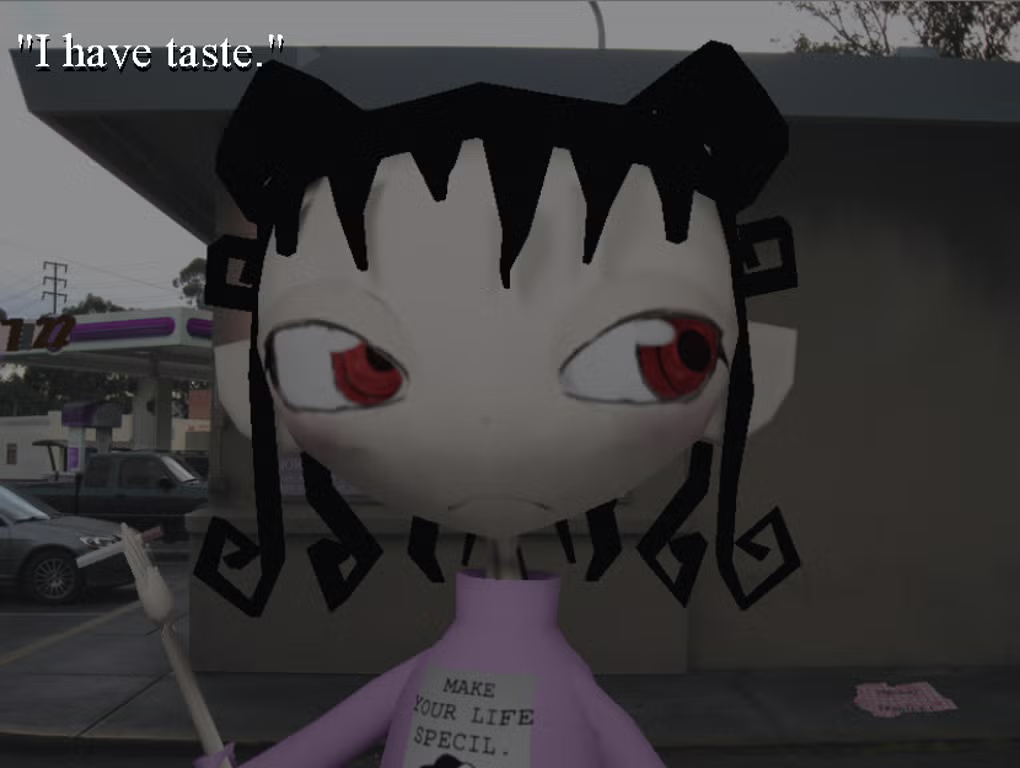
Archangel:Nemesis is a multi-media Visual Novel about the intersectional experience of growing up queer under the reigns of religious extremism. It portrays the bifurcated teen lifestyles of exploratory rebellion and the depersonalizing denial of autonomy and emotional manipulation that is requisite for the vortex of a cult. It masterfully handles the schizophrenic rift between one's authentic and conditioned self. While it isn't perfect- crack Who are you doing this for? shatter.
Archangel:Nemesis' prerendered cutscene, Bratz doll cast and experimental asset-flippery present unparalleled aesthetic richness! I crave more VNs with such acute spatial awareness! It's portrayal of suburban malaise through greyed out footage, replication of corporate propaganda imagery, gory dreams and smiley bedroom's tell us all we need to know to put us in Twigs mind! I wish art I make could have this much collage dexterity, stand so monolithically in upcycling that my story- crack What so you're just here to look at and feel suffering from afar? shatter
Archangel:Nemesis is tearing me apart. It's challenged my perception of language. I have so much concern for coming off clearly and fashionably, yet so casually does she rebuke my obsession with language as ego. Just as the grieving strains of approaching the summit strike my heart, a new plateau! I feel like I need to rethink my whole approach to art. It tells it's story so subtly yet so realistically that my Watchmen-esque authorial view of weaving a brilliant web of blunt yet rich through lines is the name of the game. I like to think I speak with heart from my mind, yet this is new! With mind from the heart! Given my recent fixation with sincerity, it feels there is so much work I have to do to divorce myself from grandiosities and indirect aplomb. I- crack Can you think about literally anyone else for one second? shatter
I felt profoundly my past self spoken to. My religious trauma hasn't really come to ahead until I recently realized how greatly Christian thought warped my capacity for compassion, how the religion all felt insincere beneath the monolithic seeming of good and bad. I wish I had the author's mind, her tact for curation, her skill to subvert, produce something so grand feeling with so much literacy of medium! It feels done out of a deep-seated desperation to be heard and allow those like us to be seen. I wish I had this in my early teens, could go back and claim my teen years, passing low-stress afternoons with my own Viva. We create these fantasies to cry together. I understand- crack Subjectivism isn't crying all the air out of the room. shatter
TeamCPU unlisted the game a few months ago. They hedge the games sincerity and dark themes, the conditions they were created under, as flaws. Chapters 3 and 4 are indefinitely stuck in development hell. After reflection, they reinstated it with the conment "I believe they are worth keeping online" and what was finished "said everything that needed to be said on the matter. The comments are flooded with praise of how impactful it was. crack How do we respect and document ephemera without ourselves being greedy? shatter
With all mirrors cracked, where rest my gaze, where rest my mind? Does one look through the rubble, piece back together or must they leave the cave?
III. Productification
Artworks are being kept prisoner in the labyrinth of refractions. We're dancing around subjects. Maybe it's all we can do. We only have words... my words, their words, the words. Yet there's no perfect engagement, no traumaless coverage, no weight in proving we listened and understood, "doing it justice".
We're flawed machines, flawed, replacable supplements for deliverables. We all tabbed out, took breaks, skimmed over lines or couldn't lock in enough to be equitable in our understanding. We are distinguished from machines by these failings to bear "perfect" fruit.
Thus, perfect engagement isn't where the standard lies, yet all refraction turns subject into product. All those mirrors above are "mine", but none of them are more than benign conversation or selfish spillage!
Some games are impersonal products, and maybe then a mirror is okay to approach a fragmentary effort, but this isn't. Archangel:Nemesis feels like a chunk of excised matter. I think it rejects being advertised and spoken of as something beyond the expressions of a trying time. I could sing my praise of how it's efforted, captivating, uncompromising within control and authentic-feeling. Yet still I'm trapped in refraction, for those are my unwarranted judgements. Can a review be moral while saying anything at all? Can a curated experience be reduced to a worded approval or discussion. Does cowering from it, speaking as it might or "yes, and"ing as I constantly do on this account actually do what I, what we want it to do?
IV. The Moral Review
The moral review would probably look how the world doesn't right now, might serve as anti-thesis to the productification and digestible tragedy the "art industry" demands to be endeared. The web wants us as solitary vacuums, accumulations of dust and stardust. The vacuum must feel indebted to the stars who kept it fed, must sing their advertising praise! But no... this isn't for mutualism. It's for undeceived sincerity; the conscious choice to engage the empty spirits in the kingdom of ends. It's not reacting to the tugged heartstrings by a hand uncut. It's feeding the tired spirits with no expectation of reciprocity.
If we want to avoid refraction, avoid misrepresenting, maybe all we can do is hug our stars and hope it goes over well.
Thank you, teamcpu. Thank you for the time you put in to make something. Thank you for sharing your writing, your visuals, your heart. Thank you for keeping it up. Thanks for the hard work.
Be kinder. Dull your edges. Speak without assertion. Judge not the art or artist, judge only your desire to interject. Sometimes, the most moral review is not saying anything at all. That's my takeaway at least, and perhaps what I ought have done here. Direct engagement without speaking over.
Post: Writing this felt like pushing a baby out. Scrawled it out on my phone note-pad as I was falling asleep, desperate to have something to say about this game-movie yet continually needing to confront my own harms. I've had a lot of difficulty coming into my own as a reviewing voice, defined more by being protean than legible. I don't know if that needs to be addressed... Hope I'm actually getting at something and not just spiralling here. Maybe the answer is to build a new house rather than try to add rooms to another. I don't know. I don't hold much certain anymore.
STEINS;GATE
You ever just... reflect on something that changed your life at some point and not know what to make of it anymore?
In high school, my three favourite games were (hold your laughter!) Persona 5, Xenoblade 2 and this. NieR and Hollow Knight, too, though they carry less baggage. Funnily enough, I was staunchly anti-anime for whatever self-important, xenophobic, stubborn reason my young mind could've mustered. It was with Steins;Gate, with realizing the narrative maturity the medium could possess, that I went on a year-long rampage of all the cultural moments I felt I had willingly neglected. It took eight months, with Monster, before I felt the high matched and started to slow my pace.
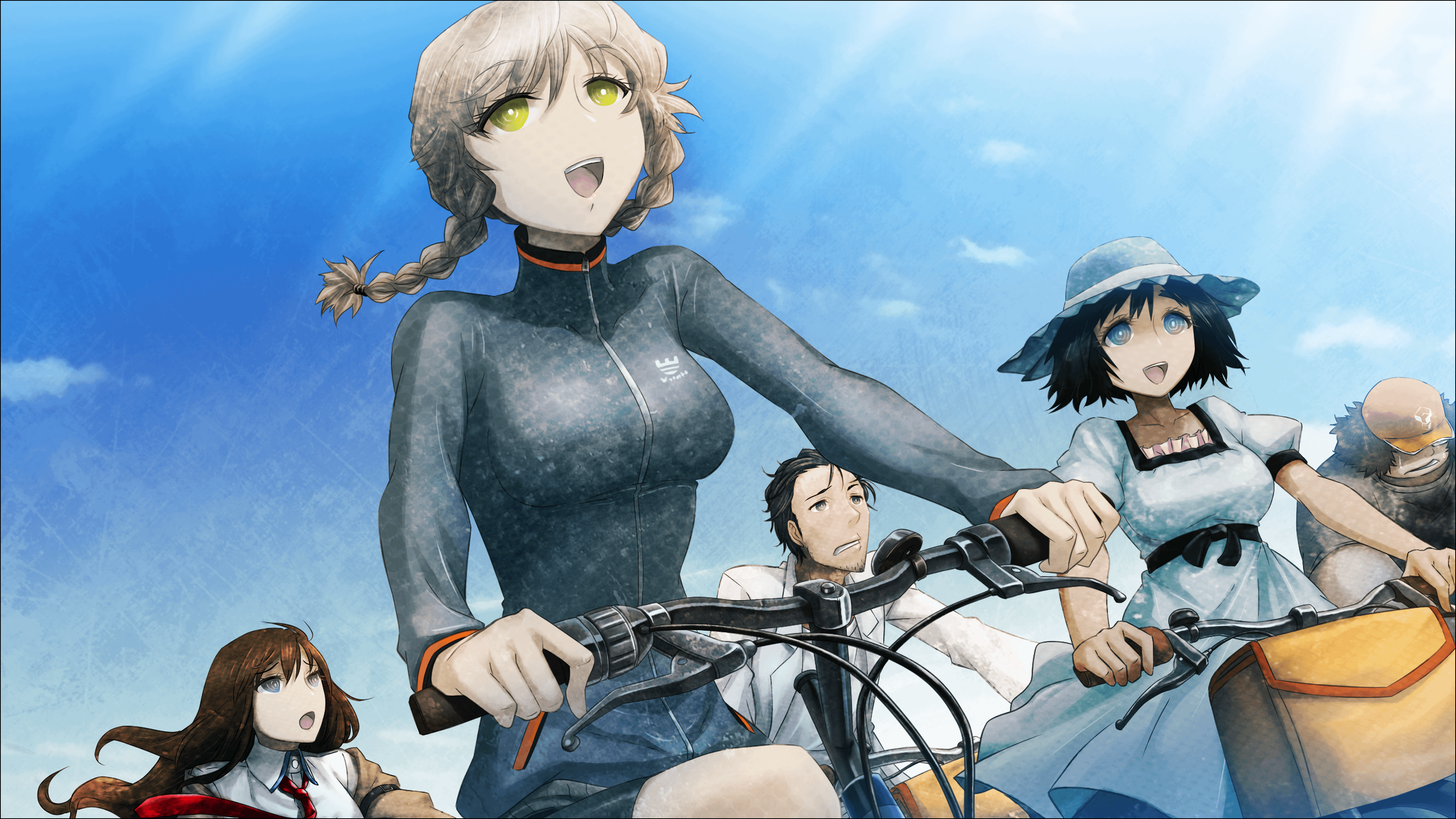
For as much as I could laud it as profound for it's questions of time, ethics and the limits of action... that's not where my mind was when I repeatedly called it "the best thing I've ever read" or "my favourite piece of fiction", it the thing that first came to mind when my uneducated ass was asked what my favourite book was. Call it loneliness, but it was the characters. To quote myself, "I love all of them. Daru is the only "pervert character" I have ever found funny (and in 0, incredibly endearing), I saw so much of myself in Kurisu, I saw in Okabe admiration next to my own embarrassing idiosyncracies, I felt nothing but the desire to protect and love Mayuri, I loved listening to Feris speak and crushed on Lukako hard enough to realize my own femininity (SHE is NOT a guy!!). It's portrayal of Akihabara some of the most effective soft power enactment known to man. Let these be my friends."
I wanted to live in Steins;Gate, to be with these characters. It's why I played 0 and the dating sim and watched a playthrough of Linear Bound Phenogram. I loved all of it. It's why I bought every bit of SciAdv I could get my hands on, but only this year have got around to, and... well...
Nine months ago, I played Robotics;Notes. In retrospect, it was thoroughly unremarkable. It was cute and exciting in the moment, but it said nothing that stuck with me. It's characters were archetypal, it was riddled with blathering and it's plot feels detached from making any real criticism. Seven months ago, I played Chaos;Head and it was a disgusting headspace, revoltingly misogynist, edgy garbage that went nowhere. I'm currently finishing up Chaos;Child and... it's alright, I guess? Most of my play is mindless, kind of disengaged. The value it presents are it's mystery and twists, and while it's characters are alright, it feels so mired in pacifying spectacle, in building up to those moments where you gawk at the screen like an ape in a very curated, textureless way. It's garishly cruel, reduced narratively through it's linearity to stakeless torture porn. They pull two Mayuri's and follow an ameliorated retread of Chaos;Head, even giving the protagonist the same nickname, the side-characters the same personalities. It's cute and gentle in the way all these games are, but it feels... like it's top priority is being a product?
With my weathered mind, I can't help but ask if Steins;Gate, something inseparable from it's predecessor and progeny, was ever good, if I'm allowed to sing it's praise anymore. I no longer see Lukako as some dreamt self, but as someone explicitly trans and denied their chosen gender so that boy can kiss girl, so that stigmas can go unchallenged and non-protagonist broken hearts can be buried. The second half of Steins;Gate, in retrospect, is about returning to the status quo after you tried to act outside of it and ended up breaking things.
Daru, even if I thought he was funny and admirable in some ways, is someone I would feel threatened and terrified around as a member of the lab. The lab, and most SciAdv casts at their heart, is functionally a harem with one other sexually-distant male character to distract from this fact. Steins;Gate is a heady dating sim and cannot be separated from this, from triggering the right flags to please and conquer the women in one's life. That really repulses me. Even as I remember the women being well-written, I'm not sure anymore given this is the framing they were created under: as commodities to get with.
Even atop this, I wonder how much, now that I'm quite literate and understand writing, how much of my time was wasted meandering through gag scenes and fluff text boxes, how much time was wasted on unremarkable points being presented as spectacles and thus remarkable, how much I was insincerely toyed with to build rapport with Steins;Gate as a product. Now that I'm literate in anime, how many of the characters are cliches, how many of it's scenes filler for framing dating flags.
I... don't know. I don't know how I feel about Steins;Gate. I fought for so long to defend it, to be in disbelief seeing anything below an 8/10. I anticipated so greatly playing everything surrounding it, I fell in love with everything it was selling. At the time, I deemed it perfect off it's narrative, it's characters and it's emotional moments. It's... prattling narrative, it's... fucktoy characters, it's... edgy spectacle moments?
That moment halfway through was the first time a story destroyed me, made me bawl my eyes out, made me fight tooth-and-nail wanting to destroy everything in my way. Lukako was the first time I felt represented in a video game. I wouldn't have cared about watching any of the beautiful anime I had if not for Steins;Gate. Hell, I don't think I would have gotten into VNs or read books if not for Steins;Gate. It's OST took me through some rough nights, backed a lot of work done. I feel like I still love it's cast and it's slower moments as genuine friends. I know that sounds sad and it's characters are commodities, but it's a value I simply can't extract from art anymore.
Steins;Gate wasn't a story, but a time in my life, something that changed me, but now it feels like I've grown past it and it has exposed itself as rotten. I don't really have a concluding point. I don't have the time to replay it these days and doubt I ever will again. I guess, maybe sometimes, you just have to let your past loves die.
ARZETTE: THE JEWEL OF FARAMORE

Positioning it next to the CD-i games, I don't feel "homage", "reimagining" or "spiritual successor" work as descriptors. Rather, Arzette feels like artistic gentrification. The originals occupy such a distinct cultural space that Arzette is blatantly wishing to assert itself into; culture for it's marketability rather than as symbolic of an actually vibrant community. It knows it's visual language is deeply memetic, it knows it's niche obscenely well, and thus makes no compromises in appropriating it.
Much like your trendy restaurants in gentrified areas, it's a game for the social media era. "Do something people will talk about, bring in your internet celebrity VAs and reviewers. It'll sell like hotcakes, people coming from all over waiting, lining up around the block purely off the image, the idea of your product." But that product isn't yours to sell, you've just commodified it!
Okay... reel it back in. DeemonAndGames articulates exactly how I felt in their review: about trying to "replicate what [the originals] accomplished", while coming off as "more stilted, more controlled". The originals were outsourced to a pressed-for-cash Russian studio, produced in a complete vacuum from even the voiceovers and character designers. You're looking at the depression following the collapse of the Soviet Union, at almost no labour regulation, at an inability to afford proper digitization equipment and having to redo every frame in an MS Paint knock-off under crunch time (source). All this in proximity to fucking Nintendo, the gold-standard golden-goose golden-child of games is what turns these sweat-shop miracles into the talk-of the-town.
Beyond this, you've got YouTube Poops, the byproduct of teenagers chopping-and-screwing this absurd dichotomy, milking every syllable and soundbite for maximal memetic juice, with no motive but killing time on the family computer.
I don't really want to call YouTube Poops an artistic revolution, but like... how many YouTubers and editors got their start in those communities, in the MLG comp and the brainrot progeny of imparsible dopamine printers? It was that YTP type of content that became the reason so many kids fell into and became addicted to YouTube (it certainly was for me!). One could argue that YouTube's early growth, that the gustatory preference for short-form content, came from kids trying to baffle their friends through clips of their favourite video game characters gasp saying swears?!
Reel it back in... Arzette, Arzette... Arzette is neither a product of the material conditions or the artistic movement that CD-i Zelda flapped-it's-butterfly-wings into existence. It is not a fan-game or for the (virtually non-existent) fans of the original package. It's not a parody. It is an original fantasy IP selling itself by means of a multi-generational community of internet users being familiar with the mask it wears. What Arzette is is a frankly mediocre, proper-noun-fetish fantasy story, one neither clever or funny enough to stand alone. Thus, rather than expounding it's own craft and aesthetic flavour, it chose the most memetic, most marketable, most culturally-loaded shell by which to package itself. I can't help but feel cynical, can't help but loathe this detached form of craft and storytelling.
The original was aloof, Arzette is self-aware. By being self-aware, it becomes reductive. The comedy is being tongue-in-cheek, being laughed-with rather than laughed-at. But this doesn't work. You can't flap your wings and presuppose a tornado. You can't outdo being authentically bizarre as one uncompromisingly is. Half it's scenes felt like prolix slogs and it's jokes come off as lame. It can't commit to sincere world-building or emotional scenes; it has to conduct everything through this veil of irony rather than admit that it wants to make something unique and special.
Arzette, given all of this, feels mean-spirited. It successfully proves it can outdo the original in every department. It conducts its art with the assumption of a shared contextual understanding. Nonetheless, it seems to crave to be everything it's making fun of. I just don't like that. I want sincere art, cringe and camp with it's heart on it's sleeve. I don't want memes for conducting commerce within a starved niche. I watched the movie Forbidden Zone yesterday; edgy, bizarre and counter-culture for the sake of it. It slots itself in amongst the midnight movie milieu, much of which was born from poignant, indigestable queer rebellion. I'm not gonna call the CD-i games anything close to queer icons or outsider art, but like... I couldn't help but draw the comparison while playing.
I don't know... I'm probably being too harsh. I don't know what the motivations were behind this. It's fun, dense, as well made as it can be within it's structural limitations. In most traditional respects, it's a good game. I just wish it had far more respect and earnestness.
BEFORE THE GREEN MOON
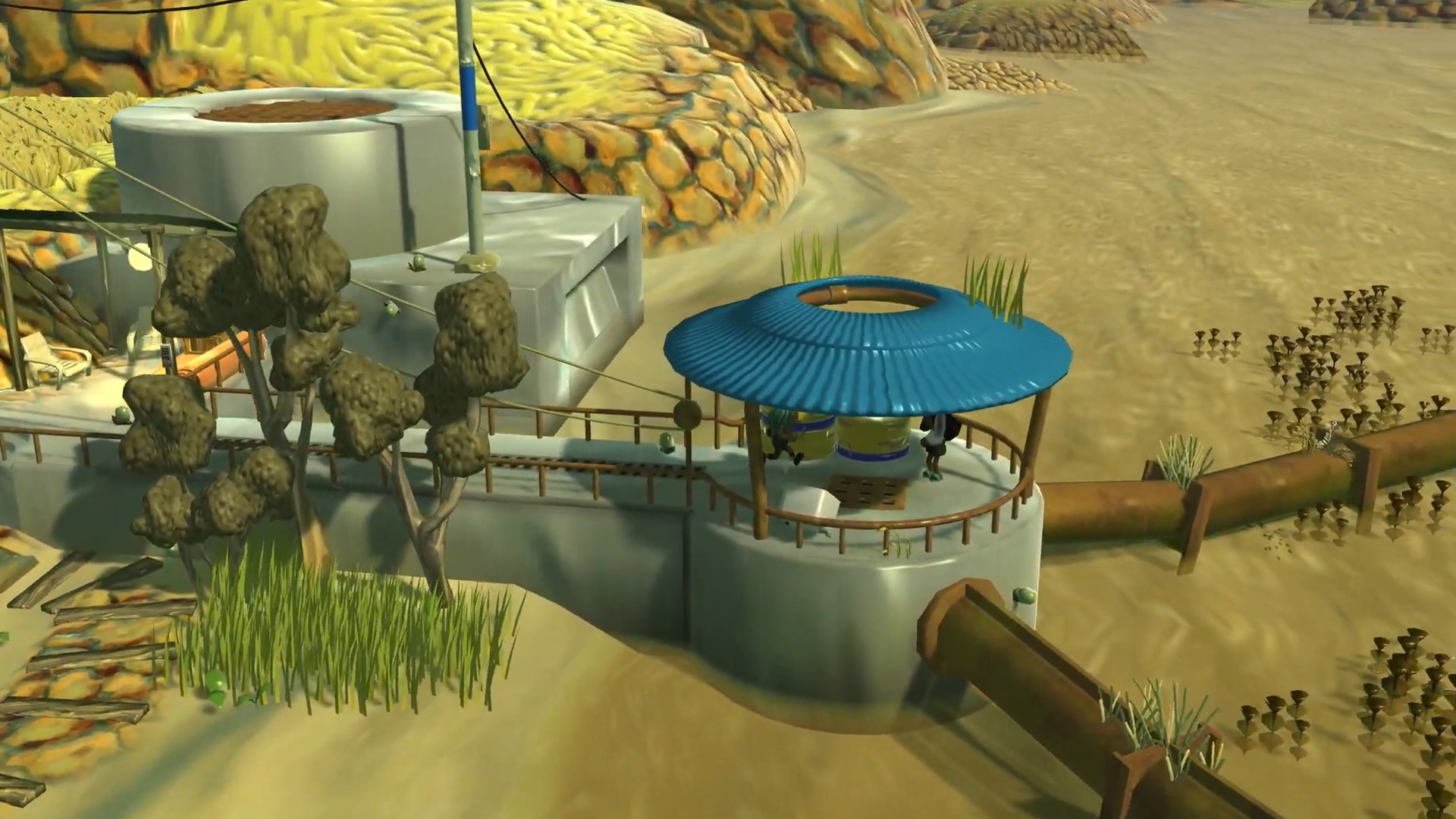
I've come to realize, through current political climates and having played Citizen Sleeper before this, I'm a down-with-the-ship type. If the world is burning, I want to stay. If people are suffering, I want to be beside them. Before the Green Moon registers your role and gives you one objective, one ending: leave. To leave is to succeed, to win the game, to have earned status. Take the corporate elevator to live on the Moon, where all of humanity is flourishing, all of life is happening. Getting FOMO by now, right? Crawl under the corporate thumb for warmth. Besides, the earth is flooded! Nature is reclaiming all, leaving only stripped-wire junk hamlets. Hitch a ride on the connective elevator that we built for resource extraction and tourism for only 110,000 of set-aside funds one-way! Don't be left behind working tirelessly for seemingly no other end.
Before the Green Moon is the first farming sim I've seen not only to be effectively anti-capitalist, but also avoid fetishizing rural communities as an escape from such systems (a pairing as rare as an anti-war war film). Please don't give me a "Stardew's opening and Joja stuff is anti-corporate", because this feels explicitly like a critique, politically, of it and it's AAA ilk. There is nothing challenging about Stardew's critique. There is a loss in the popular farming game when it moves from intimacy to a glorified tycoon game that gamifies human connection and menial labour. Stardew, I now feel, is the American Dream to Green Moon's colonial extraction.
You don't need to earn money. Nothing is making you but that elevator ride. Yet, what else are you gonna do in Trashcan: population 6? If you choose to start, your labours quickly mount. More and more rice is dumped on you from those above with expectation. None of what you grow goes back to your community, but is vacuumed up, maybe available to the local chef if he pays a jacked-up bribe to skim off the top.
In the dry season, to simply grow rice for minute returns is to work 12 hours every day, very often collapsing from exhaustion. All you can buy outside the travelling bazaar is company-owned tools that let you work harder, make you take on more a day. Beyond this, tourists arrive once a week, flooding the streets with garbage, a nickel per, that respect for your community inclines you to pick up. If you take on chickens, you must manually find feed for them or buy it for only a tiny bit less than their eggs sell for. Maybe you still have a pinch of energy left at the end of the day. Don't worry, the want to know what lies at the end of the mines will quickly manage that.
Days simply aren't long enough to hang out/enjoy and balance the swell of labours. You have just enough energy to squeeze by and break even half the year. While there is a mindless flow in min-maxxing, dedicating all to the accrual of money, to do so is to fundamentally lose what makes Before the Green Moon special. To treat the game as transitory, a consumable experience book-ended by more consumable experiences, or to treat it as something to be rushed, are both passively punished.
The people of our Gamecubian, Chulipean mossy scrapheap townlet are not auxiliary to our accrual, not archetypal cogs, but fellow vagabonds in arms. All, for one reason or another, are unable to go to the moon. Their role is too pivotal on Earth, they aren't emotionally able, they'll never have enough money. While the Moon is a choice for you, which it's massive corporate structure that takes up half the town and blocks the stars makes it seem inevitable, it isn't for them. Our relationships are developed through drip-feeding shared hours whenever the town isn't cascaded by the needs of tourism [On more than one occassion, I couldn't replenish my energy and finish watering my crops because tourists had taken every seat at the restaurant], through idle afternoons in which bonds advance not through lore but a growing nearness.
Relationships take time and require checking in on each other. The game's real story is optional, for those who care about the community they've been placed in. It's really delicate and tender, and takes remaining a couple years of active commitment to see the bulk of and to truly get to know people (one character only learned my name on Day 40). There is great autonomy placed on the player that places them along the spectrum between community and capital-oriented, which importantly, are placed in opposition.
By the end, there is a genuine ennui that you've embodied and made a home in. The suffering becomes tolerable not for the chance at taking the elevator up, but by feeling loved and in shared struggle with those around you. I stayed for a year and three seasons and felt legitimately awful buying the ticket, yet my curiosity, my want to have beaten the game, was too strong. I abandoned my community, did what they never could and what the chuckle-fucks up there seemed to do almost weekly. What is home: is it where you endlessly toil, but everyone knows your name, or is it amidst thousands of endless faces, amidst innovation and thriving crafts? At this point in my life, I've come to realize, sometimes it's better to stay behind.